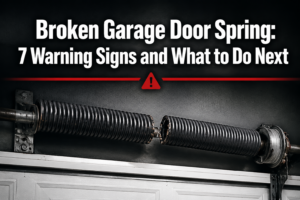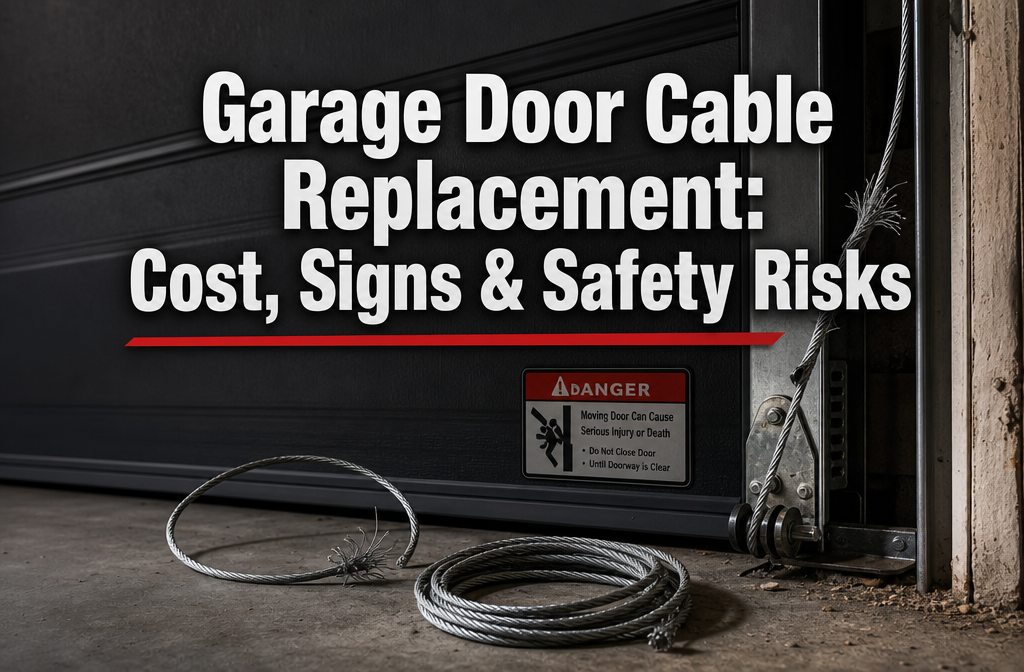
Garage door cable replacement typically costs between $150 and $350 CAD for a standard residential door, including parts and labour. Cables should be replaced immediately when fraying, snapping, or slack is visible, because a failed cable can cause the door to fall suddenly, creating a serious injury or property damage risk. This is not a safe DIY repair for most homeowners.
Key Takeaways
- Garage door cable replacement costs range from roughly $150 to $350 CAD for most homes, depending on door size, cable type, and local labour rates.
- Cables work under extreme tension alongside torsion or extension springs — a failure in either component puts enormous stress on the other.
- The most common warning signs include frayed or kinked cable strands, a door that hangs crooked, slack cable loops on the floor, and grinding or snapping noises during operation.
- Attempting DIY cable replacement without proper tools and training carries a real risk of serious injury from sudden spring release or a falling door.
- Both lift cables should be replaced at the same time, even if only one is visibly damaged, to ensure balanced operation and prevent a second failure shortly after.
- Cable lifespan is typically 7 to 12 years under normal residential use, though extreme cold, humidity, and heavy daily cycles shorten that range.
- Always disconnect the garage door opener before inspecting cables, and never stand under a door with a suspected cable failure.
- If a cable snaps, treat it as an emergency garage door repair situation — do not attempt to operate the door manually.
What Does Garage Door Cable Replacement Cost in 2026?
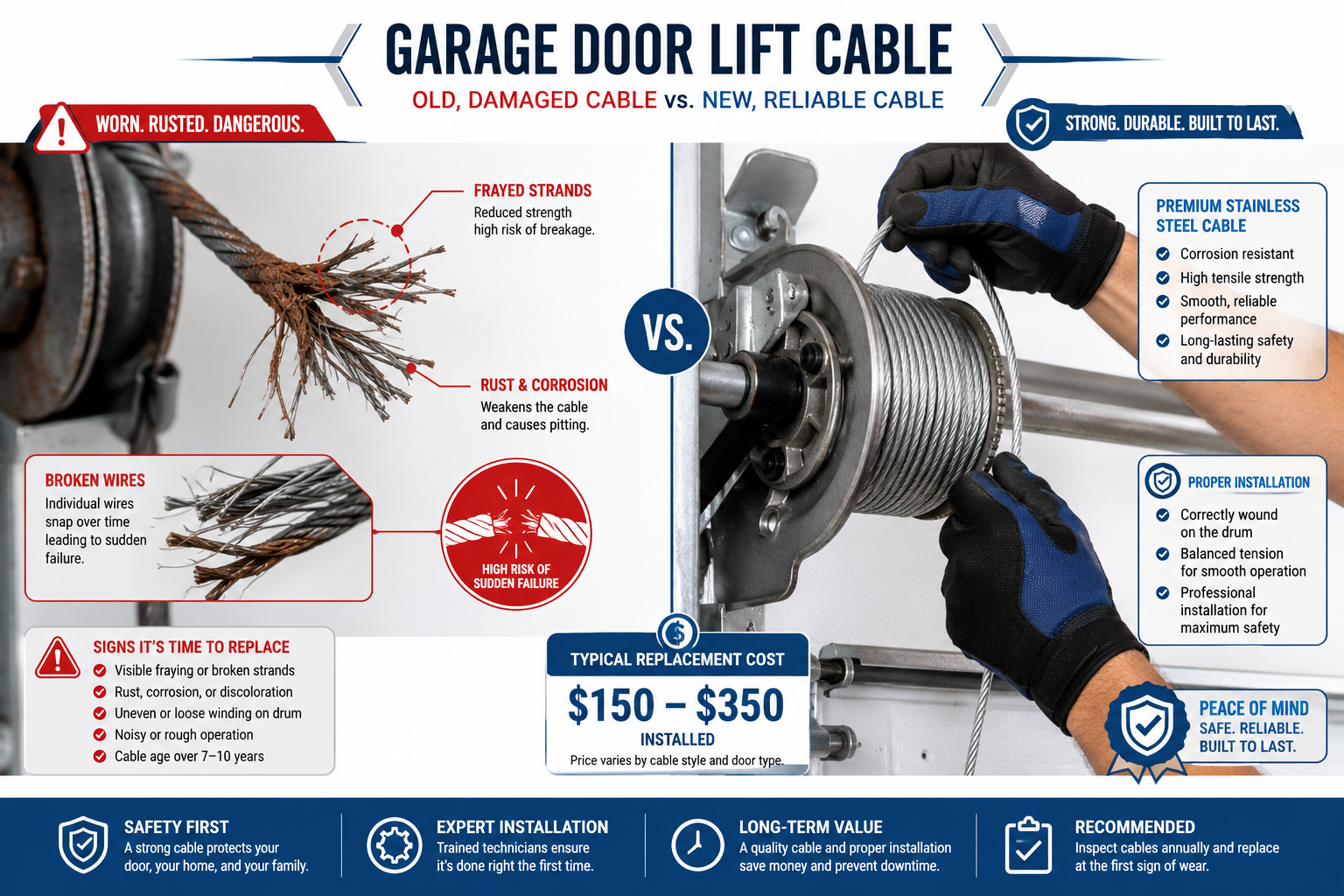
Garage door cable replacement in Canada costs between $150 and $350 CAD for most standard residential doors, covering both parts and labour. The exact price depends on door width, cable type, and whether related components like drums or bottom brackets also need attention.
Here is a breakdown of typical cost factors:
| Cost Factor | Estimated Range (CAD) |
|---|---|
| Cable parts (pair) | $20 – $60 |
| Labour (standard door) | $100 – $200 |
| Emergency/same-day service | Add $50 – $100 |
| Double-wide door (16 ft) | $250 – $400 |
| Cable + drum replacement | $200 – $450 |
| Cable + spring replacement | $300 – $600+ |
A few things that push the cost higher:
- Double-car doors use longer, heavier cables and take more time to service.
- Broken bottom brackets are often found alongside snapped cables and require replacement at the same time.
- Same-day or after-hours service adds a premium, though it’s often necessary when a cable fails and the car is trapped inside.
- Older door systems with non-standard cable sizes may require special-order parts, adding time and cost.
💡 Decision rule: If the quote for cable replacement alone exceeds $400 on a single door, ask for a full door inspection — at that price point, it may make more sense to evaluate the overall condition of the door system before committing.
Common mistake: Some homeowners buy cables online to save money and ask a technician to install them. Many technicians will decline or charge the same labour rate regardless, and mismatched cable gauges can create new problems. Let the technician supply matched parts.
What Are the Warning Signs That Cables Need Replacement?
Cables rarely snap without warning. Most failures follow a period of visible wear that homeowners can spot during a basic visual check.
The clearest signs that garage door cable replacement is needed:
- Fraying or unraveling strands — Steel cables are made of twisted wire strands. When individual strands begin to separate or fray, the cable is near the end of its safe life.
- Visible rust or corrosion — Surface rust weakens the steel over time, especially in humid climates or unheated garages through Canadian winters.
- Slack or loose cable — A cable that appears loose, coiled on the floor, or hanging away from the drum has either snapped or jumped off the drum.
- Door that opens or closes unevenly — If one side of the door rises faster than the other, or the door looks tilted while moving, one cable may be stretched or partially failed.
- Grinding or popping sounds — Cables under uneven tension create noise as they drag against the drum or track hardware.
- Door stops mid-travel — The opener’s safety mechanism may be detecting resistance caused by a failing cable and stopping the door automatically.
- Visible gap between cable and bottom bracket — The cable should be firmly attached to the bottom corner bracket. Any separation is a red flag.
For a broader checklist of symptoms that signal urgent attention, see 5 Signs You Need Garage Door Repair Near Me Now.
Edge case: On doors with extension springs (common on older two-car garages), the safety cable that runs through the spring is a separate component from the lift cable. Both need to be inspected. A broken extension spring safety cable doesn’t stop the door from working immediately but turns the spring into a dangerous projectile if it breaks.
What Are the Safety Risks of Ignoring a Damaged Cable?
A damaged or broken garage door cable is one of the most dangerous mechanical failures a homeowner can face. Garage doors weigh between 130 and 400 pounds depending on material and size, and the cable system is what keeps that weight under control.
Real risks when cables are ignored:
- Sudden door collapse — A door with one failed cable can drop without warning, injuring anyone standing underneath or damaging a vehicle.
- Spring overload — When a cable fails, the torsion or extension spring absorbs the full imbalanced load. This can cause the spring to snap violently. Learn more about related risks in our guide to garage door spring repair.
- Track derailment — An unbalanced door can jump off its tracks, bending the tracks and sometimes the door panels themselves.
- Opener motor damage — The opener will strain against the resistance of a misaligned or cable-failed door, burning out the motor over time.
- Security risk — A door that won’t close fully leaves the garage and any attached home interior exposed.
Critical safety rule: Never stand in the path of a garage door when testing it after a suspected cable failure. Always operate it from the side, with no one near the door opening.
Who this applies to: These risks apply to all standard sectional garage doors, whether single or double-wide, with torsion or extension spring systems. The risk is highest on heavier doors (solid wood or insulated steel) where the weight is greatest.
Can You Replace Garage Door Cables Yourself?
Most homeowners should not attempt DIY garage door cable replacement. The cables are directly connected to the spring system, which stores enough energy to cause severe injury if released suddenly.
Why this repair is different from other DIY tasks:
- Torsion springs are wound under hundreds of pounds of torque. Releasing or adjusting them incorrectly causes the spring to unwind explosively.
- The cable must be properly seated in the drum groove — an off-track cable will fail again quickly and may damage the drum.
- Both cables must be tensioned equally. Uneven tension causes the door to bind, damaging the opener and tracks.
- Working on a ladder near a heavy door under spring tension is a high-risk environment even for trained technicians.
When DIY might be acceptable (limited cases):
- Reattaching a cable that has slipped off the bottom bracket on a door with no spring tension (door fully open and springs fully relaxed) — even then, this requires knowledge of the system.
- Inspecting and cleaning cables as part of regular maintenance.
For anything involving tension adjustment, drum winding, or full cable replacement, professional service is the right call. If the situation is urgent, same-day garage door repair is available from qualified technicians.
How Does the Garage Door Cable Replacement Process Work?
A professional cable replacement on a standard single door takes between 45 minutes and 1.5 hours. Here is what the process involves:
Step-by-step overview:
- Disconnect the opener — The technician unplugs or disengages the automatic opener to prevent accidental activation.
- Secure the door — Clamps or locking pliers are placed on the tracks below the bottom rollers to hold the door in place while spring tension is released.
- Release spring tension — On torsion spring systems, the technician uses winding bars to carefully unwind the spring. On extension spring systems, the door is opened fully to relax the springs.
- Remove the old cable — The cable is detached from the bottom bracket and unwound from the drum.
- Inspect related hardware — The drum, bottom bracket, and cable anchor are checked for wear or damage before the new cable goes in.
- Install the new cable — The cable is threaded through the bottom bracket, routed along the track, and wound onto the drum in the correct groove pattern.
- Re-tension the spring — Spring tension is restored to the correct number of turns for the door’s weight and height.
- Test balance and operation — The door is manually lifted to the halfway point and released. A properly balanced door stays in place. Then the opener is reconnected and tested through several full cycles.
Both cables are replaced together — even if only one has failed — because the second cable has experienced the same wear cycles and is likely close to failure as well.
How Long Do Garage Door Cables Last, and What Affects Lifespan?
Garage door cables typically last 7 to 12 years under normal residential use. A household that opens and closes the garage door four times per day will cycle through roughly 1,400 cycles per year. Most residential cables are rated for 10,000 cycles, which translates to about 7 years at that usage rate.
Factors that shorten cable lifespan:
- High cycle frequency — Households with multiple drivers or home-based businesses that use the garage frequently will wear cables faster.
- Cold climate exposure — Repeated freeze-thaw cycles cause metal fatigue and accelerate corrosion on uncoated cables.
- Poor lubrication — Cables that run dry against drums and hardware develop surface wear faster. Applying a light silicone or lithium-based lubricant to the cables annually helps.
- Misaligned tracks — A door that doesn’t travel smoothly puts lateral stress on the cable, causing uneven wear.
- Heavy doors — Solid wood or thick insulated steel doors place more constant load on the cable system.
Maintenance tip: During annual garage door servicing, ask the technician to inspect cable condition specifically. Catching early fraying adds months or years to the cable’s safe service life and avoids an unexpected failure.
What Types of Garage Door Cables Are There?
There are two main cable types used on residential garage doors, and they are not interchangeable.
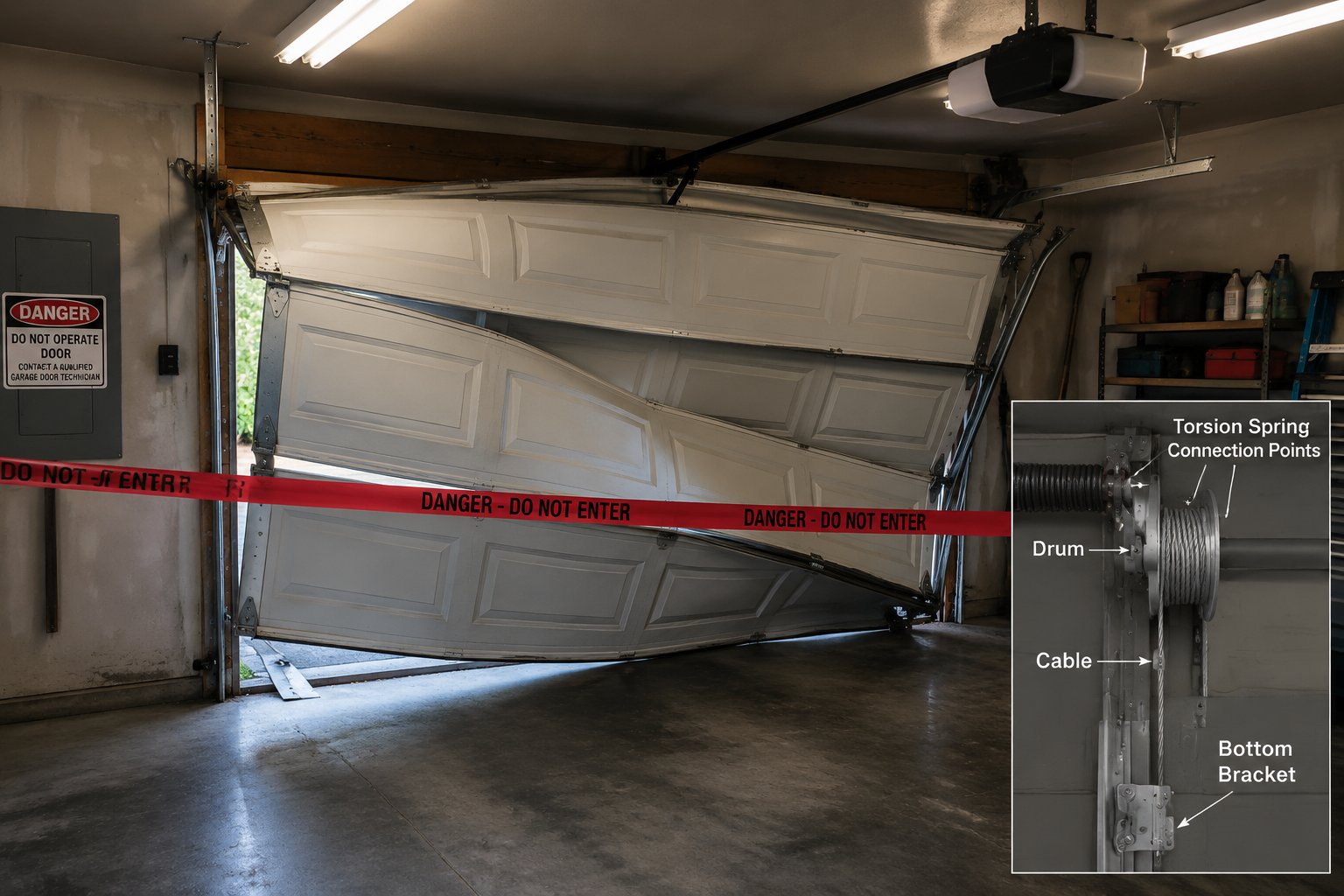
1. Torsion spring lift cables Used on doors with a torsion spring mounted above the door opening. The cable runs from the bottom corner bracket, up along the vertical track, and winds onto a drum at each end of the torsion bar. This is the most common setup on modern residential doors.
2. Extension spring lift cables Used on doors with extension springs that run along the horizontal tracks on each side. The cable connects the bottom bracket to a pulley system that transfers the spring’s force to lift the door. These systems also require a separate safety cable threaded through the spring itself.
Cable gauge matters: Heavier doors require thicker cable (larger gauge number in the cable’s wire diameter). Using an undersized cable on a heavy door is a common mistake when homeowners source their own parts. A qualified technician will match the cable spec to the door’s weight.
For homeowners considering a full system upgrade, exploring garage door installation options may be worth comparing against ongoing repair costs on an older door.
When Should You Replace the Whole Door Instead of Just the Cables?
Cable replacement makes sense for most doors, but there are situations where a full door replacement is the more practical choice.
Consider full replacement when:
- The door is more than 15 to 20 years old and has had multiple repairs in recent years.
- Panels are cracked, warped, or severely dented in addition to the cable failure. See our overview of garage door panel replacement for comparison.
- The spring system is also at or near end of life, making the total repair cost approach the price of a new door.
- The door lacks modern insulation and the homeowner wants to improve energy efficiency at the same time.
- The door’s weight class or size is being changed (for example, converting a single door to a double-wide opening).
Stick with cable replacement when:
- The door is less than 10 years old and otherwise in good structural condition.
- Only the cables and possibly the drums show wear.
- The door style and insulation still meet the homeowner’s needs.
A straightforward cost comparison: cable replacement at $150 to $350 versus a new door installation starting around $1,200 to $2,500 CAD installed. For most doors under 12 years old in good condition, repair wins clearly.
Frequently Asked Questions
How long does garage door cable replacement take? A professional technician typically completes a standard single-door cable replacement in 45 to 90 minutes. Double-wide doors or jobs that also involve drum or spring replacement may take up to 2.5 hours.
Is it safe to use a garage door with a frayed cable? No. A frayed cable can snap at any time, causing the door to fall suddenly. Stop using the door and arrange for repair as soon as possible. If the car is trapped inside, contact a technician for emergency garage door repair.
Do both cables need to be replaced at the same time? Yes. Both cables experience the same wear and age together. Replacing only the broken one typically results in the second cable failing within weeks or months, requiring another service call.
What happens if a garage door cable snaps while the door is open? The door may fall suddenly, or it may stay partially open but become impossible to close safely. Do not attempt to manually pull the door down. Call a technician immediately.
Can a garage door opener cause cable damage? Yes. An opener that is out of adjustment, has a faulty limit switch, or continues to run after the door reaches its travel endpoint can put excessive stress on the cable and drum, accelerating wear.
How much does it cost to replace garage door cables in Oakville or Burlington? In the Oakville and Burlington area, cable replacement typically falls in the $150 to $300 CAD range for a standard single door. For local service, garage door repair in Burlington and Oakville technicians can provide same-day assessments.
What is the difference between a lift cable and a safety cable on extension spring doors? The lift cable connects the bottom bracket to the pulley system and carries the door’s weight. The safety cable threads through the extension spring and is a secondary containment device — if the spring snaps, the safety cable prevents it from flying across the garage. Both need to be intact and in good condition.
Can cold weather cause garage door cables to break? Cold weather itself doesn’t snap cables directly, but it causes metal contraction, increases brittleness in already-worn strands, and thickens lubricants so the door operates under more resistance. Most cold-weather cable failures happen in cables that were already near the end of their service life.
How often should garage door cables be inspected? Once per year as part of a full garage door tune-up is the standard recommendation. Homeowners can do a basic visual check monthly by looking for fraying, rust, or slack while the door is in the closed position.
What causes garage door cables to fray? The most common causes are age and metal fatigue, misaligned drums, a door that is out of balance, insufficient lubrication, and corrosion from moisture exposure. Cables that are undersized for the door’s weight also fray faster.
Conclusion: What to Do Next
Garage door cable replacement is one of those repairs that rewards prompt action. A cable showing early fraying is a manageable, affordable fix. A cable that snaps under load becomes an emergency that can damage the door, the vehicle, or injure someone nearby.
Actionable next steps:
- Do a visual inspection today. Look at both cables from the side of the door (not underneath). Check for fraying, rust, slack, or uneven tension.
- Listen during operation. Grinding, snapping, or uneven movement are early warning sounds worth taking seriously.
- Schedule annual maintenance. A yearly tune-up catches cable wear before it becomes a failure. Ask the technician to inspect drums, bottom brackets, and springs at the same time.
- Call a professional for any cable work. The spring tension involved makes this a job for trained technicians with the right tools.
- Don’t delay if signs are present. If fraying or slack is already visible, book the repair before the next use of the door.
For homeowners in the Oakville, Burlington, Mississauga, and Hamilton areas, professional cable replacement with same-day availability is accessible through Oakview Garage Doors. A working, properly tensioned cable system is one of the simplest ways to protect both the people and property in a home.