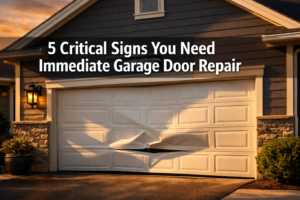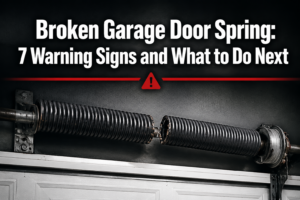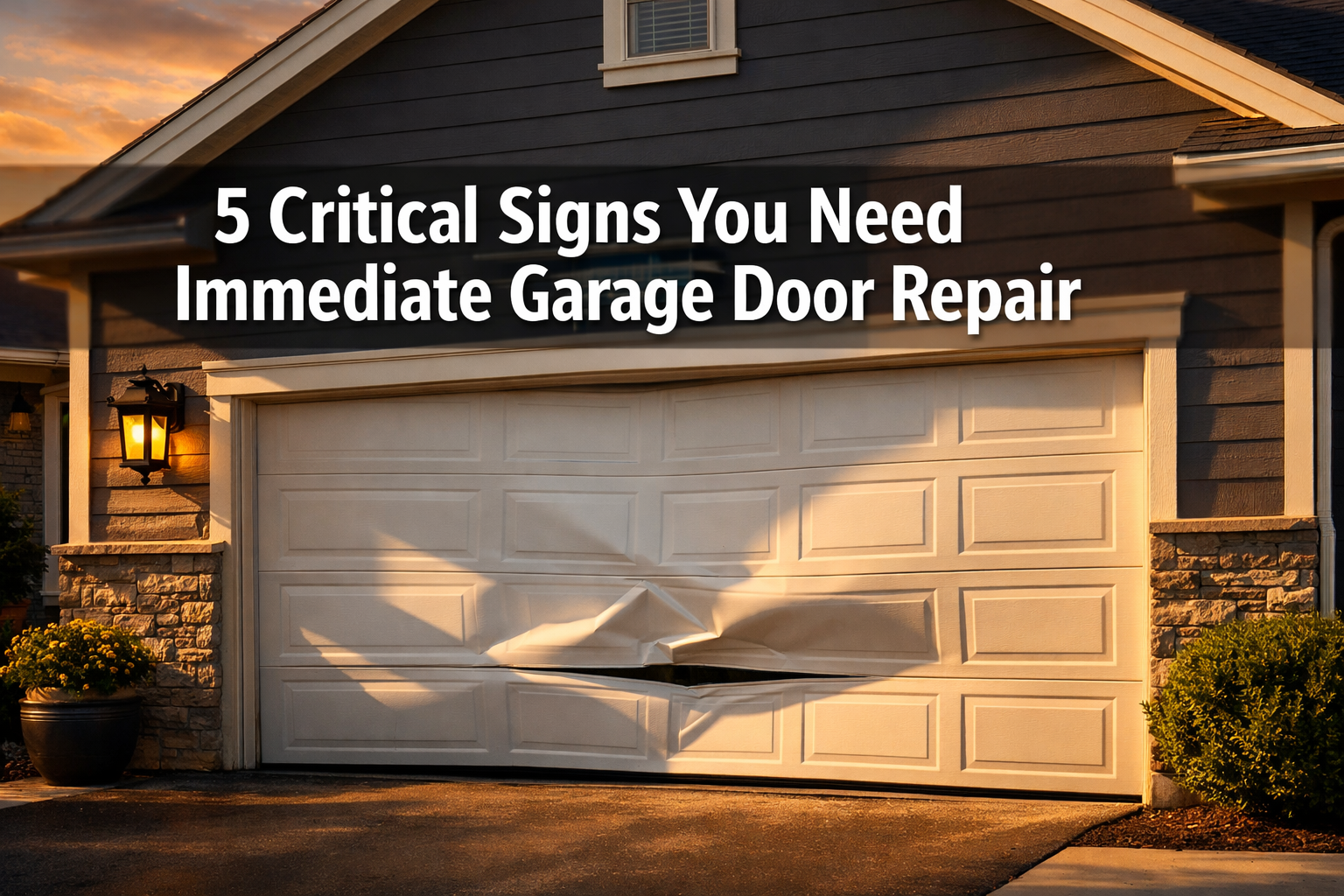
A garage door showing signs of spring failure, unusual noise, slow or uneven movement, visible structural damage, or compromised safety sensors needs professional repair right away. Delaying service on any of these issues can escalate a minor mechanical problem into a full system failure, a security risk, or a safety hazard for your household. If you’re searching for garage door repair near me, these five warning signs are your clearest signal that it’s time to call a qualified technician.
Key Takeaways
A snapped or worn torsion spring is one of the most dangerous and urgent repair situations a homeowner can face.
Grinding, banging, or scraping noises during operation almost always point to a mechanical component that needs immediate attention.
A door that moves unevenly, jerks, or reverses unexpectedly may have cable, track, or opener issues that worsen with continued use.
Visible panel damage, warping, or gaps in the door’s seal can compromise both home security and energy efficiency.
Malfunctioning safety sensors are a serious liability, especially in households with children or pets.
The global garage door repair services market is growing steadily, driven by aging residential infrastructure and rising demand for smart home integration.
Doors older than 15 years that require repeated repairs are often better candidates for full replacement than ongoing patchwork fixes.
Smart garage door opener adoption reached 11% of U.S. internet households in early 2026, meaning more homeowners now have remote diagnostics available to catch problems earlier.
Always choose a licensed, insured technician for spring and cable work. These components are under extreme tension and genuinely dangerous to handle without proper training.
Seasonal temperature swings, particularly in Canadian climates, accelerate wear on springs, cables, and weather seals faster than many homeowners expect.
What Are the Most Urgent Signs Your Garage Door Needs Repair?
The most urgent signs include a broken torsion spring, frayed or snapped cables, a door that won’t close fully, and safety sensors that fail to detect obstructions. These aren’t issues to monitor for a few weeks. They require same-day or next-day professional attention.
Garage doors are, somewhat counterintuitively, one of the most mechanically complex systems in a typical home. The average residential door weighs between 130 and 350 pounds, and the springs, cables, and tracks that manage that weight operate under significant tension every single cycle. When something starts to fail, the failure tends to accelerate quickly.
Here’s a practical breakdown of urgency levels:
Warning SignUrgency LevelDIY-Safe?Broken torsion or extension springCritical, same-dayNoSnapped or fraying cableCritical, same-dayNoSafety sensor malfunctionHighNoDoor won’t close or open fullyHighPossiblyLoud grinding or banging noiseMedium-HighNoSlow or uneven movementMediumPossiblyVisible panel dent or damageMediumPartialWorn weather sealLow-MediumYes
If your situation falls in the “Critical” or “High” category, stop using the door entirely until a technician assesses it. Continued operation under those conditions can cause the door to drop suddenly, which is a serious injury risk.
Sign #1: The Spring System Has Failed or Sounds Wrong
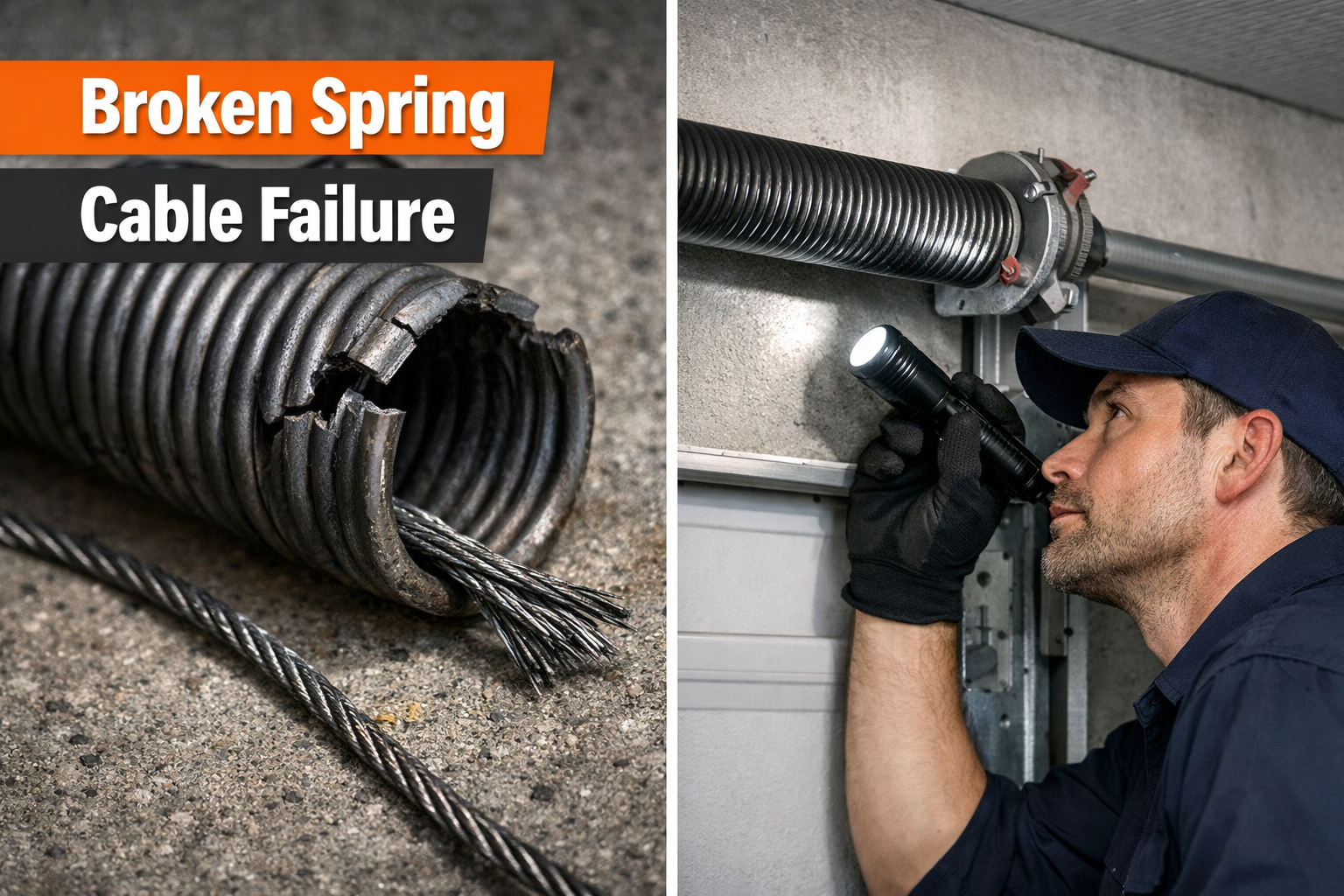
A broken garage door spring is the single most common reason homeowners search for garage door repair near me on an urgent basis. When a torsion spring snaps, it produces a loud bang that many people mistake for something falling in the garage. The door then becomes nearly impossible to lift manually.
Torsion springs are rated for a specific number of cycles, typically somewhere between 10,000 and 20,000 depending on the quality of the spring. For a household that opens and closes the door four times per day, that translates to roughly 7 to 14 years of use before the spring reaches the end of its rated lifespan. Many homeowners don’t realize this until the spring fails without warning.
Signs the spring system is failing or already failed:
The door feels extremely heavy when you try to lift it manually
One side of the door rises higher than the other during operation
You can see a visible gap or separation in the coil of the torsion spring above the door
The door opens a few inches and then stops
You heard a loud bang from the garage, even if the door appears intact
Common mistake: Some homeowners attempt to operate the door with a broken spring using the opener motor. This puts enormous strain on the opener’s drive system and can burn out the motor within a few cycles. If you suspect a broken spring, disconnect the opener and leave the door closed until a technician arrives.
For professional spring service in the Oakville and surrounding areas, garage door spring repair should always be handled by a licensed technician. The stored energy in a torsion spring is genuinely dangerous, and this is not an exaggeration made for liability reasons.
Sign #2: Unusual Noises During Operation
Grinding, scraping, banging, or rattling sounds during garage door operation are the system’s way of communicating that something mechanical is wrong. A well-maintained door should operate with relatively little noise, perhaps a low hum from the opener motor and the soft mechanical sound of the chain or belt drive.
Specific noises tend to point to specific problems:
Grinding or scraping: Usually indicates the rollers are worn, the tracks are misaligned, or there’s debris caught in the track system. Metal-on-metal grinding can score the track surface, compounding the damage over time.
Banging or popping: Often associated with a loose or broken spring, or sections of the door that are no longer properly connected.
Rattling: Typically loose hardware, including hinges, bolts, or the chain drive on the opener.
Squeaking: Usually a lubrication issue, but persistent squeaking after lubrication can indicate worn rollers or hinges that need replacement.
The tricky part is that noise problems can feel minor, especially when the door still opens and closes. That’s perhaps the most common reason homeowners delay calling for service. But noise is almost always a leading indicator of a more significant failure that’s developing underneath the surface.
According to industry guidance, persistent noise in a garage door system, particularly in doors older than 15 years, is often a signal that replacement is more cost-effective than repeated component repairs. If a door has needed three or four service calls in the past two years and is still making noise, that’s worth a direct conversation with your technician about the repair-versus-replace calculation.
For opener-specific noise issues, garage door opener repair in Oakville can diagnose whether the sound is originating from the drive system or the door mechanism itself.
Sign #3: The Door Moves Slowly, Unevenly, or Reverses Unexpectedly
A garage door that hesitates, jerks, moves faster on one side than the other, or reverses before fully closing is exhibiting behavior that almost always has a mechanical or electronic cause. This is not normal wear and should not be treated as such.
Slow or uneven movement can stem from several sources. Cable tension imbalance is one of the more common culprits: if one cable has stretched or partially frayed, the door will pull to one side during operation, creating uneven stress on the track system and the door panels themselves. Track misalignment produces a similar symptom, where the rollers bind against the track at a specific point in the travel path.
Unexpected reversal, where the door starts to close and then immediately reverses back to the open position, is often an auto-reverse function responding to a perceived obstruction. This could mean the safety sensors are misaligned, dirty, or failing. It could also mean the close-force sensitivity on the opener is set incorrectly. Either way, it needs to be checked.
Decision rule: If the door reverses consistently at the same point in its travel path, the issue is likely mechanical (track, roller, or cable). If it reverses inconsistently or at different points, the issue is more likely electronic (sensor or opener settings).
Homeowners in Burlington and surrounding areas dealing with this kind of erratic behavior can find local support through garage door repair in Burlington, where technicians can assess both the mechanical and electronic components in a single visit.
Sign #4: Visible Structural Damage to Panels, Tracks, or Hardware
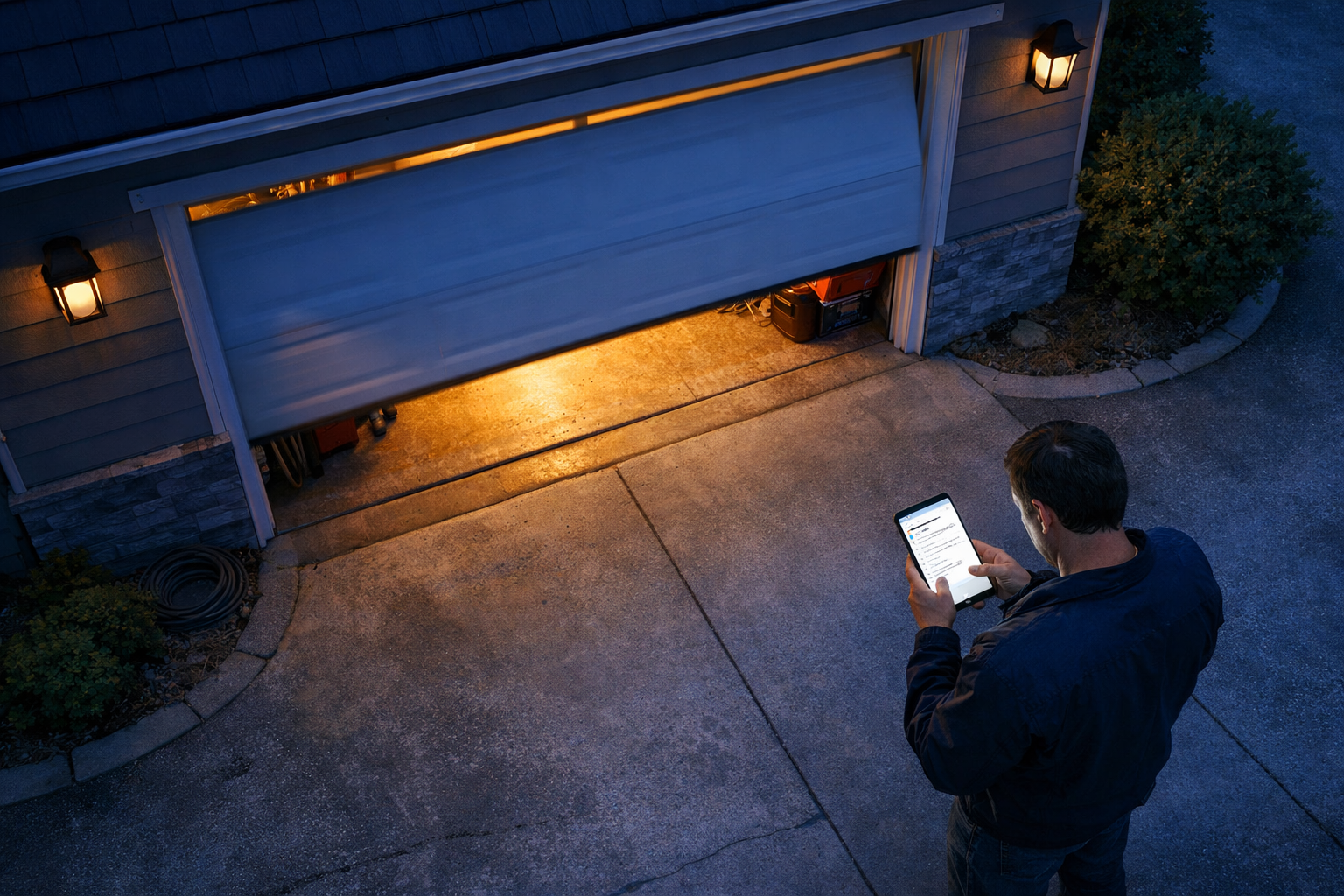
Visible damage to the door’s panels, bent tracks, broken hinges, or compromised weather sealing are signs that the structural integrity of the system has been affected. Some of these issues develop gradually from years of use. Others happen suddenly, from an accidental vehicle impact or storm damage.
Bent or dented panels are more than a cosmetic issue, though they’re often treated as one. When a panel is significantly deformed, it can affect how the door sections articulate during operation, putting stress on adjacent panels and the hinge system. A door that looks only slightly dented on the outside may be tracking poorly because of how that deformation affects the overall geometry of the door.
Bent tracks are particularly serious. A track that has been knocked out of alignment, even slightly, will cause the rollers to bind and can eventually cause the door to come off the track entirely during operation. This is a situation where continued use genuinely risks a sudden door drop.
Hardware to inspect regularly:
Hinges: Should be firmly attached with no visible cracking or deformation
Rollers: Should spin freely with no flat spots or wobble
Cables: Should be taut and free of fraying, kinking, or rust
Bottom seal: Should make consistent contact with the ground across the full width of the door
Track brackets: Should be firmly anchored to the wall with no visible movement
For situations where only one or two sections are damaged rather than the full door, garage door panel replacement can be a cost-effective solution, provided the replacement panels are still available for that door model.
Sign #5: Safety Sensor Malfunctions or Security Vulnerabilities
Malfunctioning safety sensors are perhaps the most underappreciated sign that a garage door needs immediate professional attention. The auto-reverse safety system, required on all residential garage doors sold in North America since 1993, is designed to prevent the door from closing on a person, pet, or object. When it stops working correctly, the door becomes a genuine safety hazard.
Symptoms of sensor problems include:
The door won’t close using the wall button or remote, but will close when you hold the wall button continuously
The indicator lights on the sensors are blinking or off entirely
The door reverses immediately after touching the ground
One sensor light is green and the other is red or amber (misalignment indicator)
Beyond sensors, security vulnerabilities in the garage door system have become a more prominent concern in 2026. With 72% of homeowners expressing interest in smart garage door solutions according to recent industry surveys, the gap between what current systems offer and what homeowners expect has become more visible. Older openers using fixed-code technology are particularly vulnerable to code-grabbing devices, and a door that doesn’t fully seal at the bottom or sides creates an obvious entry point.
OSHA compliance standards are also being more actively enforced in commercial and residential contexts, with hazard exposure cited even in situations where no prior injury has occurred. This regulatory environment is pushing both homeowners and service providers to take safety system maintenance more seriously than perhaps they did five years ago.
For urgent situations where the door won’t close at all or has come off its tracks, garage door emergency repair provides same-day service to restore both function and security. Homeowners in Mississauga can also access emergency garage door repair in Mississauga for rapid response.
How Do You Find Reliable Garage Door Repair Near Me?
Finding reliable garage door repair near me comes down to verifying licensing and insurance, checking for transparent pricing, and confirming the company services your specific door brand and opener type. In 2026, the garage door repair sector remains highly fragmented, with significant variation in service quality and pricing between regional providers.
Practical steps for evaluating a repair company:
Confirm licensing and insurance before any technician arrives. This protects you if something goes wrong during the repair.
Ask for a written estimate before work begins. Reputable companies provide this without hesitation.
Check whether they carry parts on the truck. A company that stocks common springs, cables, and rollers can usually complete the repair in a single visit.
Look for same-day or next-day availability for urgent issues. A company that books two weeks out isn’t the right fit for a door that won’t close.
Read recent reviews with attention to how the company handles problems, not just the positive experiences.
Ask about warranty on parts and labor. A 90-day minimum on labor and a manufacturer warranty on parts is a reasonable baseline expectation.
The garage door repair services market was valued at approximately $4.5 billion in 2022 and is projected to grow to around $6.5 billion by 2030, driven largely by aging residential infrastructure and the increasing complexity of smart-enabled systems. That growth also means more providers entering the market, which makes due diligence more important, not less.
For homeowners across the Greater Toronto Area and surrounding regions, the Oakview Garage Doors service area covers Oakville, Burlington, Hamilton, Mississauga, and beyond, with same-day availability for urgent repairs.
When Should You Repair vs. Replace Your Garage Door?
Repair is the right choice when the door is structurally sound, fewer than 15 years old, and the issue is isolated to a single component. Replacement becomes more cost-effective when the door is old, has required multiple repairs in recent years, or when the cumulative repair cost approaches 50% or more of a new door’s installed price.
A few decision rules that are genuinely useful here:
Choose repair if: The door is under 12 years old, the damage is limited to one or two components, and the door’s insulation and security features still meet your needs.
Choose replacement if: The door is over 15 years old, has visible rust or warping across multiple panels, uses an outdated opener with fixed-code security, or has required more than two service calls in the past 18 months.
Consider replacement if: You’re planning to sell the home. A new garage door consistently ranks among the highest ROI home improvement projects in North American real estate markets.
The 2026 trend toward high-performance polyurethane insulation and sustainable door materials also means that a new door installation can meaningfully reduce energy costs, particularly in climates with cold winters. If the current door’s weather sealing has degraded significantly, the energy savings from a replacement can offset a portion of the installation cost over time.
For homeowners considering a new door, garage door installation services can include a full assessment of the existing system to help make the repair-versus-replace decision with accurate cost information.
FAQ
How do I know if my garage door spring is broken?
A broken torsion spring typically produces a loud bang when it snaps. After that, the door will feel extremely heavy to lift manually and may only open a few inches before stopping. You may also see a visible gap in the spring coil above the door.
Is it safe to use a garage door with a broken spring?
No. Operating a door with a broken spring puts dangerous strain on the opener motor and creates a risk of the door dropping suddenly. Disconnect the opener and leave the door in the closed position until a technician can replace the spring.
How long does a garage door spring last?
Standard torsion springs are rated for approximately 10,000 to 20,000 cycles. For a household using the door four times daily, that’s roughly 7 to 14 years. High-cycle springs are available and can extend that lifespan significantly.
Why does my garage door reverse before it closes completely?
This is usually caused by misaligned or dirty safety sensors, incorrect close-force settings on the opener, or a mechanical obstruction in the track. Check whether the sensor indicator lights are both solid (usually green and green, or green and amber depending on the brand). If one is blinking, the sensors need realignment or cleaning.
What’s the average cost of garage door repair in 2026?
Costs vary significantly by region and repair type. Spring replacement typically ranges from $150 to $350 for a single spring, including labor. Cable replacement, opener repair, and track realignment each carry their own cost ranges. Always get a written estimate before authorizing work.
Can I lubricate my garage door myself to reduce noise?
Yes, this is one of the few maintenance tasks that’s genuinely DIY-friendly. Use a silicone-based or lithium-based lubricant on the rollers, hinges, and springs. Avoid WD-40, which is a solvent rather than a lubricant and can actually accelerate wear on metal components.
How often should a garage door be professionally serviced?
Annual professional maintenance is a reasonable standard for most residential doors. This typically includes spring tension adjustment, cable inspection, roller and hinge lubrication, safety sensor testing, and opener force calibration.
What does it mean when my garage door opens on its own?
Spontaneous opening is usually caused by a stuck remote button, radio frequency interference from a nearby source, or a programmed remote that’s been accidentally triggered. If the issue persists after checking remotes, the opener’s logic board may need inspection.
Is a dented garage door panel worth repairing?
It depends on the extent of the damage and the door’s age. A single dented panel on a relatively new door is usually worth replacing if matching panels are available. Widespread damage across multiple panels, or damage to a door that’s already near the end of its lifespan, typically favors full replacement.
How quickly can a garage door emergency be resolved?
Most reputable companies offering emergency service can respond within a few hours and complete common repairs, including spring replacement and cable repair, in a single visit, provided they carry the necessary parts on the truck.
Conclusion
A garage door that’s showing any of the five signs covered in this guide, whether it’s a broken spring, unusual noise, erratic movement, structural damage, or sensor failure, is not a system to monitor casually. These are mechanical signals that something is wrong now, and the cost of addressing them early is almost always lower than the cost of dealing with a complete failure or, worse, an injury.
The practical next steps are straightforward. If the issue is urgent, stop using the door and contact a licensed repair technician for same-day service. If the situation is less critical but still concerning, schedule a professional inspection before the problem escalates. And if the door is aging and has needed repeated repairs, use that service call as an opportunity to have an honest conversation about whether repair or replacement makes more financial sense at this point.
For homeowners across Oakville, Burlington, Hamilton, Mississauga, and the broader Greater Toronto Area, Oakview Garage Doors provides professional repair, emergency response, and installation services with same-day availability for urgent situations. Getting a qualified technician to assess the door is the single most useful action any homeowner can take when these warning signs appear.