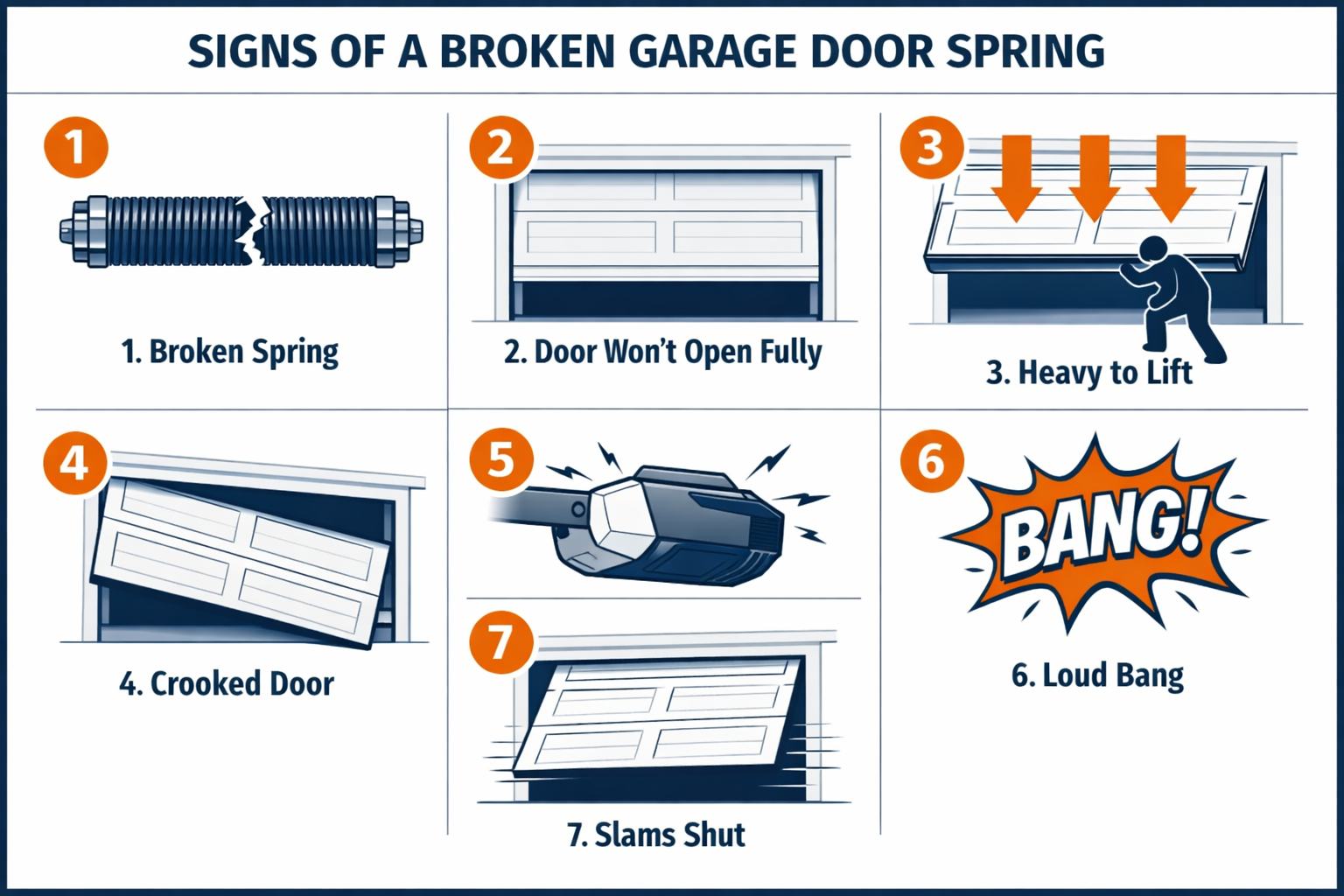
A broken garage door spring is one of the most common, and most dangerous, garage door failures a homeowner will face. The seven key warning signs include a loud bang, a visible gap in the spring coil, a door that feels extremely heavy, uneven or crooked movement, a door that only opens a few inches, a door that slams shut, and an opener that strains or stops mid-cycle. When any of these signs appear, stop using the door immediately and call a licensed technician.
Key Takeaways
- Garage door springs do most of the lifting, the opener only guides the door; the spring carries the weight.
- A snapped spring can release 200–400 pounds of stored force in a fraction of a second, making DIY repair genuinely dangerous.
- Seven specific warning signs can alert homeowners before or right after a spring fails, catching them early prevents costlier damage.
- Do not pull the red emergency-release cord when a spring is broken, it turns the door into dead weight that can drop instantly.
- Standard torsion springs are rated for roughly 10,000 cycles; high-use households can exhaust that in just a few years, not the commonly cited “7–10 years.”
- Spring replacement is far cheaper than repairing a damaged opener, bent tracks, or a crushed vehicle caused by a door that drops unexpectedly.
- Twice-yearly lubrication with silicone-based spray and a quick visual inspection can extend spring life and catch early warning signs.
- Same-day emergency service is widely available, there is no reason to force a door with a broken spring to operate.
What Does a Garage Door Spring Actually Do?
The spring system, not the electric opene, is what actually lifts the garage door. Most residential doors weigh between 150 and 300 pounds, and the spring stores mechanical energy when the door closes, then releases that energy to assist lifting when the door opens. The opener provides guidance and control, but without a functioning spring, it is essentially trying to lift a car with a bicycle motor.
There are two main spring types:
| Spring Type | Location | How It Works | Common On |
|---|---|---|---|
| Torsion spring | Horizontal bar above the door | Twists and unwinds to lift | Most modern doors |
| Extension spring | Along the horizontal tracks, sides | Stretches and contracts | Older or lighter doors |
Torsion springs are wound to roughly 25–35 quarter-turns during installation and store what experts describe as the equivalent of 200 to 400 pounds of force. That stored energy is what makes a snapped spring so hazardous, it does not release slowly.
How Long Do Garage Door Springs Last?
Spring lifespan depends on cycle count, door weight, climate, and maintenance, not just calendar years. Standard torsion springs are generally rated for around 10,000 cycles (one cycle = one open + one close). High-cycle springs are rated for 20,000 to 50,000+ cycles.
The commonly repeated “7–10 years” lifespan estimate is misleading for high-use households. A family that opens and closes the garage door six times per day will hit 10,000 cycles in roughly four and a half years. A household that uses the garage twice a day might get 13+ years from the same spring.
Factors that shorten spring life:
- Heavy insulated doors (more tension required)
- Extreme cold climates (metal becomes brittle)
- Lack of lubrication (increased friction and corrosion)
- Improperly sized or calibrated springs (accelerated wear)
- High daily usage frequency
Choose high-cycle springs if: the garage is used as a primary entrance, the household has multiple drivers, or the door is heavier than average (solid wood, heavily insulated steel).
Broken Garage Door Spring: 7 Warning Signs and What to Do Next
Recognizing these signs early can prevent property damage, injury, and a door that traps a vehicle inside. Each sign below comes with a direct recommended action.
Sign 1: A Loud Bang From the Garage
What it means: A sudden, sharp bang, often described as a gunshot or firecracker, is the most dramatic sign of a spring snapping. The sound comes from the rapid release of stored tension in the coil.
What to do: Do not open the garage door. Do not attempt to inspect the spring while the door is in an open or partially open position. Call a technician immediately. Many homeowners mistake this sound for a break-in or a vehicle backfire; if the bang came from the garage, check the spring visually from a safe distance before assuming anything else.
Sign 2: A Visible Gap in the Spring Coil
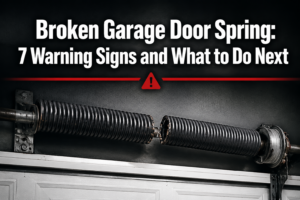
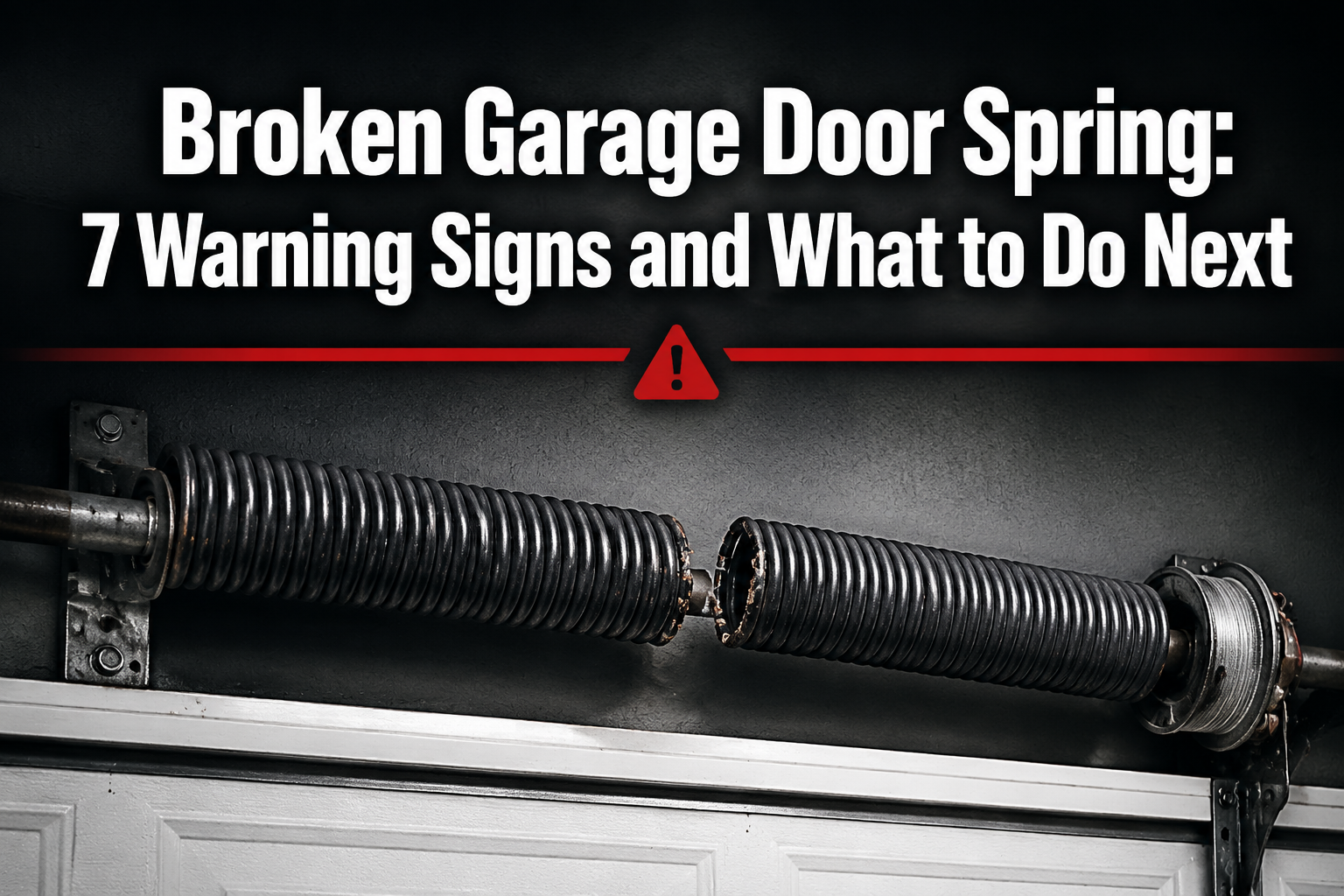
What it means: A broken torsion spring will show a clear 1–2 inch gap somewhere along the coil. This is the point where the metal separated under tension.
What to do: This is a definitive confirmation of a broken spring. The door should not be operated in any way. Even if the opener appears to work, running it with a broken spring will strain the motor and can damage the opener, the cables, and the tracks.
Sign 3: The Door Feels Extremely Heavy
What it means: When a spring breaks, the door loses its counterbalance. A door that normally lifts with one hand may suddenly feel like it weighs 200+ pounds, because without the spring, it effectively does.
What to do: If testing manually (with the opener disconnected), lift the door only a few inches. If it feels unusually heavy or drops back down when released, stop immediately. A door in this condition can fall and cause serious injury. For professional help, see garage door spring repair services for same-day assistance.
Sign 4: The Door Only Opens a Few Inches, Then Stops
What it means: Most modern openers have a built-in safety feature that stops the motor when it detects unusual resistance. A broken spring creates exactly that resistance, so the opener halts after lifting the door just a few inches.
What to do: Do not repeatedly press the opener button trying to force it open, this risks burning out the motor. This symptom is frequently misdiagnosed as an opener problem, leading homeowners to replace the opener when the actual issue is the spring.
Sign 5: The Door Moves Unevenly or Looks Crooked
What it means: On doors with two springs (one on each side), if only one spring breaks, the door will lift unevenly. One side rises while the other drags, causing the door to tilt or bind in the tracks.
What to do: Stop operating the door immediately. A crooked door under tension can jump the tracks, bend the track hardware, or cause the cables to snap. Even if the door appears to open fully, the asymmetric load is damaging components with every cycle. If you’re in the Burlington or Oakville area, garage door repair in Burlington or same-day repair in Oakville can address this quickly.
Sign 6: The Door Slams Shut or Drops Quickly
What it means: A functioning spring slows the door’s descent as it closes. Without that counterbalance, the door can fall rapidly under its own weight, slamming into the ground.
What to do: Keep people, pets, and vehicles clear of the door’s path. A door that slams shut can cause serious injury and damage the bottom seal, panels, and floor. This is an emergency situation, do not use the door until the spring is replaced.
Sign 7: The Opener Strains, Hums, or Stops Mid-Cycle
What it means: The opener motor is not designed to lift the full weight of the door alone. When a spring fails, the opener works far beyond its rated capacity, causing it to hum loudly, move slowly, or stop mid-cycle as its thermal overload protection kicks in.
What to do: Disconnect power to the opener to prevent motor burnout. Do not attempt to manually operate the door without first confirming the spring status. If the opener has been running against a broken spring for multiple cycles, have a technician inspect the opener as well, the motor or drive mechanism may have sustained damage. For opener-specific issues, garage door opener repair is a related service worth checking.
What Should You Do Immediately After Spotting These Signs?
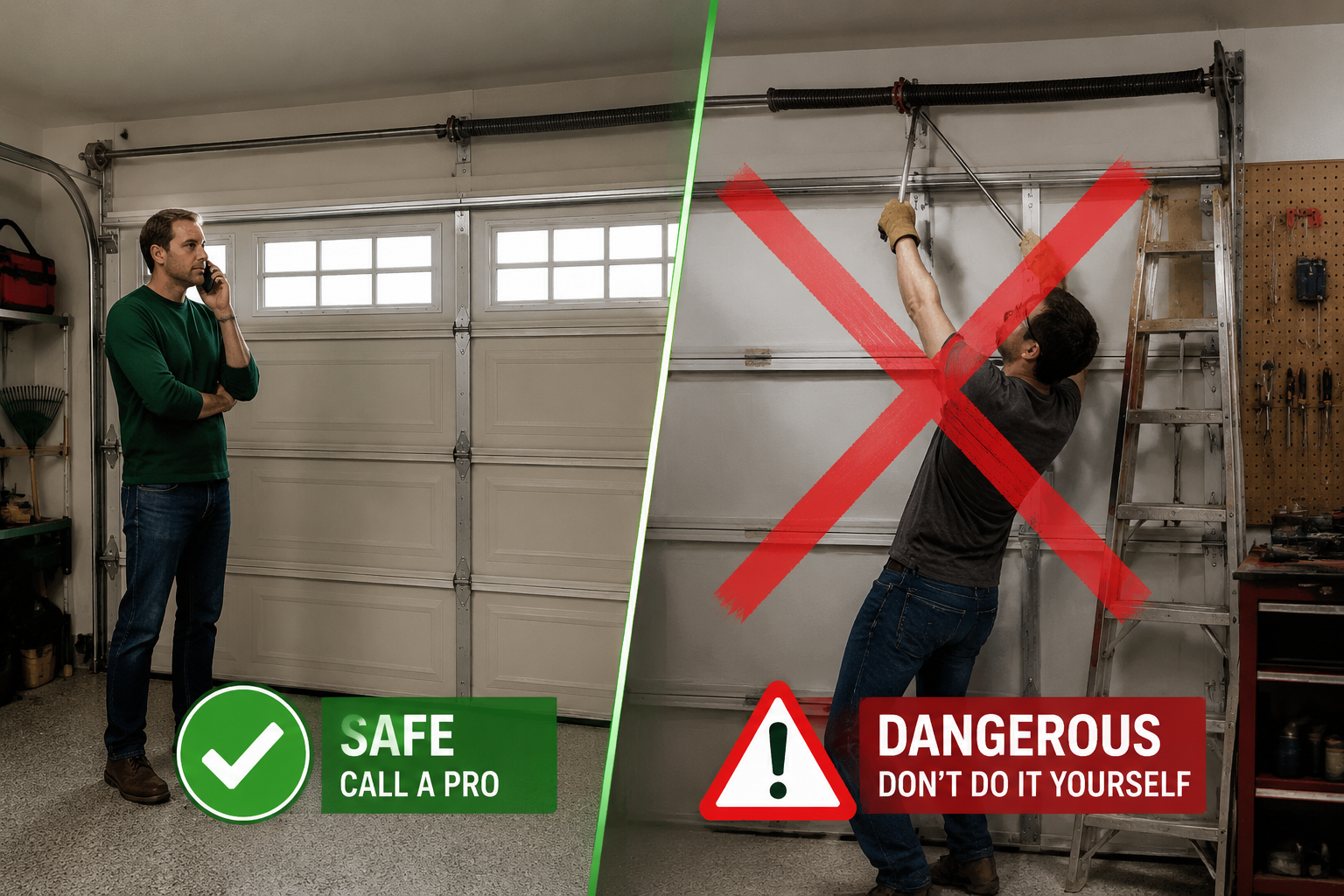
Stop using the door and call a professional. That is the complete answer for most homeowners.
Here is a safe, step-by-step response checklist:
- Stop operating the door, do not use the opener or attempt to lift manually.
- Keep the door in the closed position if possible — an open door with a broken spring is under significant stress.
- Do NOT pull the red emergency-release cord on the opener. Disconnecting the opener from a door with a broken spring removes the only mechanism keeping the door from dropping freely. Experts consistently describe this as a “deadly trap”, the door becomes 150–300 pounds of uncontrolled dead weight.
- Keep children and pets away from the garage door area.
- Call a licensed garage door technician — most reputable companies offer same-day or emergency service. If you need urgent help, emergency garage door repair in Oakville and emergency repair in Mississauga are available for rapid response.
- Do not attempt DIY spring replacement, see the safety section below for why.
Why Is DIY Garage Door Spring Repair So Dangerous?
Torsion springs store an enormous amount of mechanical energy, estimates from industry professionals put it at 200 to 400 pounds of force wound into a coil roughly two to three feet long. When that energy releases unexpectedly, it does so in a fraction of a second.
Specific hazards include:
- Metal shards and projectile fragments when a spring snaps, especially on springs without a containment rod running through the coil
- Sudden door drop if the spring slips during winding or unwinding
- Eye injuries from recoiling spring ends, a 2023 ophthalmology report documented open-globe eye injuries from garage door spring incidents among approximately 35,000 garage-door-related injuries reported annually in the U.S.
- Legal and liability exposure, bypassing safety sensors or disabling entrapment protection devices (required under UL 325 standards) to force a malfunctioning door can expose a homeowner to significant liability if an injury occurs
The spring is not like a hinge or a cable. It is a precision-wound component under extreme tension. It does not forgive mistakes.
Professional technicians use calibrated winding bars, safety glasses, and specific torque procedures developed for each spring type and door weight. Even experienced DIYers with general mechanical skills are strongly advised against this particular repair.
How Much Does Garage Door Spring Replacement Cost?
Spring replacement cost varies by spring type, door size, and region, but here are reasonable general estimates for 2026:
| Service | Estimated Cost (CAD) |
|---|---|
| Single torsion spring replacement | $150 – $300 |
| Double torsion spring replacement | $250 – $450 |
| Extension spring replacement (per spring) | $100 – $200 |
| Upgrade to high-cycle springs | Add $50 – $150 per spring |
| Emergency / after-hours service | Add $50 – $100 |
Note: These are general market estimates for the Ontario region in 2026. Actual pricing varies by company, door specifications, and any additional repairs needed.
Choose standard springs if: the door is used infrequently and the budget is a priority. Choose high-cycle springs if: the garage is a primary entrance or the door is heavy, the higher upfront cost pays off over time.
How Can Homeowners Prevent Spring Failure?
Preventative maintenance is inexpensive and genuinely extends spring life. The core routine recommended by industry professionals involves two main tasks:
1. Lubricate the springs twice a year Use a silicone-based spray lubricant (not WD-40, which is a solvent and can strip existing lubrication). Apply a light coat along the full length of the torsion spring coil. This reduces friction, slows corrosion, and keeps the metal flexible through temperature changes.
2. Inspect visually every few months Look for:
- Rust or surface corrosion on the coil
- Uneven coil spacing or visible gaps
- Fraying or kinking near the end cones
- Any change in how the door sounds or feels during operation
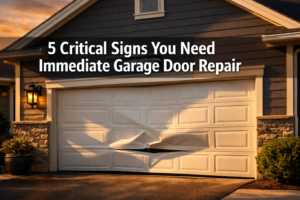
3. Schedule a professional tune-up annually A technician will check spring tension, balance the door, inspect cables and drums, and identify wear before it becomes a failure. This is especially important for doors approaching the 8,000–10,000 cycle range. For a broader look at when professional attention is needed, 5 critical signs you need immediate garage door repair covers related warning indicators worth knowing.
Broken Garage Door Spring: 7 Warning Signs and What to Do Next — FAQ
Q: Can a garage door open with a broken spring? Technically, some openers will attempt to open the door with a broken spring, but doing so risks burning out the motor, bending the tracks, and snapping the cables. The door should not be operated until the spring is replaced.
Q: How do I know if it’s a spring problem or an opener problem? Disconnect the opener by pulling the red emergency-release cord while the door is fully closed and supported. Then try to lift the door manually. If it feels extremely heavy or won’t stay up on its own, the spring is the issue, not the opener.
Q: Is it safe to use the garage door after hearing a loud bang? No. A loud bang from the garage is the classic sound of a torsion spring snapping. Inspect the spring visually from a safe distance. If there is a gap in the coil, the spring has broken and the door should not be used.
Q: How long does spring replacement take? A professional technician typically completes a standard torsion spring replacement in 1–2 hours. Emergency same-day service is available from most reputable companies.
Q: Should both springs be replaced at the same time? Yes, in almost all cases. If one spring has reached the end of its cycle life, the other is typically close behind. Replacing both at the same time saves on labor costs and prevents a second failure shortly after the first.
Q: What happens if I ignore a partially broken or worn spring? A spring showing early warning signs, rust, noise changes, uneven movement — will eventually fail completely, often at the worst possible moment. Ignoring it also accelerates wear on the opener, cables, and tracks, turning a $250 spring repair into a much larger service bill.
Q: Can cold weather cause a spring to break? Yes. Metal becomes more brittle in cold temperatures, and springs that are already worn or under-lubricated are more likely to snap during a cold snap. This is why spring failures spike in late fall and winter in colder climates like Ontario.
Q: Are extension springs safer than torsion springs? Extension springs stretch rather than twist, but they carry their own risks, particularly if they lack safety cables running through the coil. Without safety cables, a snapped extension spring can become a projectile. Torsion springs with a containment rod are generally considered the safer modern standard.
Q: How do I find a reliable spring repair technician? Look for licensed, insured technicians with verifiable reviews. Many reputable companies offer same-day service across the Greater Toronto Area and surrounding regions. Oakview Garage Doors serves multiple Ontario locations including Oakville, Burlington, Mississauga, and Hamilton.
Q: What if the door is stuck open with a broken spring? This is a priority situation. Do not leave a door stuck open with a broken spring — the door is under significant stress and could drop. Call for emergency service. If the door must be temporarily supported, use a proper door clamp or locking pliers on the track below the bottom roller, but do not rely on this as a long-term solution.
Conclusion: Act Early, Stay Safe
A broken garage door spring is not a problem that improves with time or patience. The seven warning signs — a loud bang, a visible coil gap, extreme door weight, uneven movement, limited opening travel, a slamming door, and an opener that strains, are clear signals that the spring system needs immediate professional attention.
Actionable next steps:
- Stop using the door the moment any of these signs appear.
- Do not pull the emergency-release cord on the opener if a spring failure is suspected.
- Call a licensed technician for same-day or emergency service, this is not a repair to delay or DIY.
- Ask about high-cycle spring upgrades if the door is heavily used.
- Start a twice-yearly maintenance routine with silicone lubricant and a quick visual inspection to catch early warning signs before they become failures.
For homeowners across Oakville, Burlington, Mississauga, Hamilton, and surrounding areas, professional garage door spring repair is available with same-day response. Don’t wait for a complete failure, the cost of prevention is always lower than the cost of a crisis.